Light, Noise & Air Quality
What to Expect During Flaring
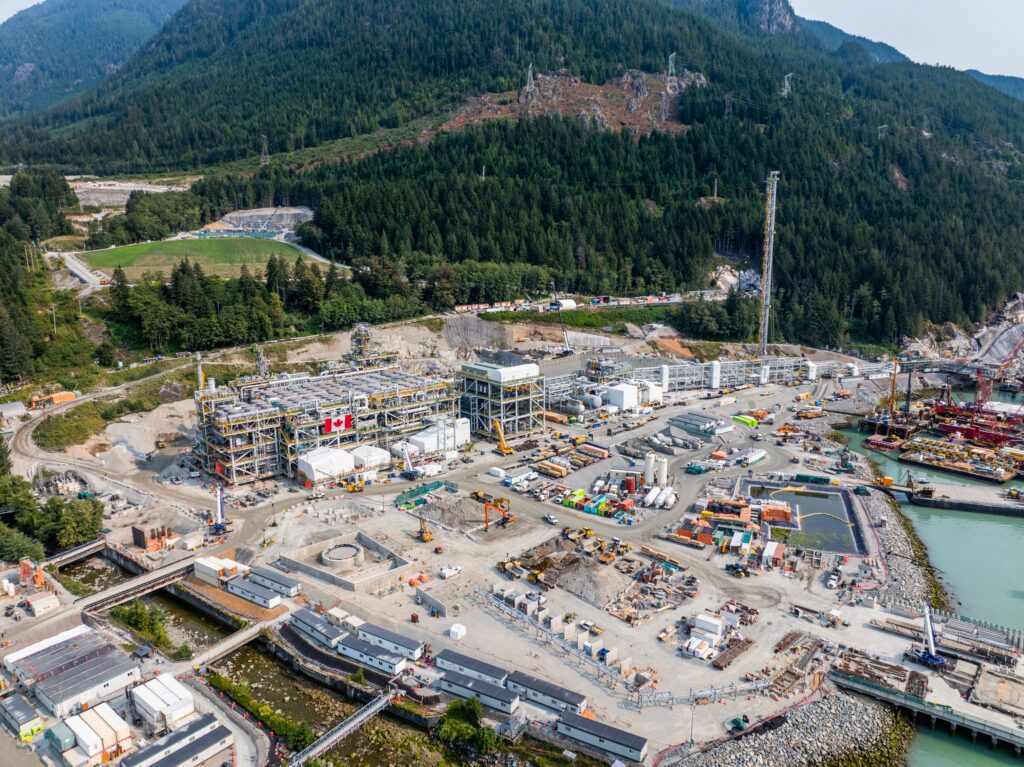
Flaring is a routine, safe and controlled part of operating the Woodfibre LNG facility. During a flaring event, people in surrounding communities may see a flame or glow from the flare stack and, depending on their location and conditions, some may also hear it.
Studies of light, sound and air quality help show what people in surrounding communities can expect during flaring and assess potential effects on people and the environment.
How noticeable a flaring event is will depend on the amount of gas being flared, your location, weather conditions and existing background light and sound.
Simulation: See and Hear Flaring From Your Community
The experience of flaring will vary depending on where you are in relation to the Woodfibre LNG facility, as well as the size of the flaring event and weather conditions.
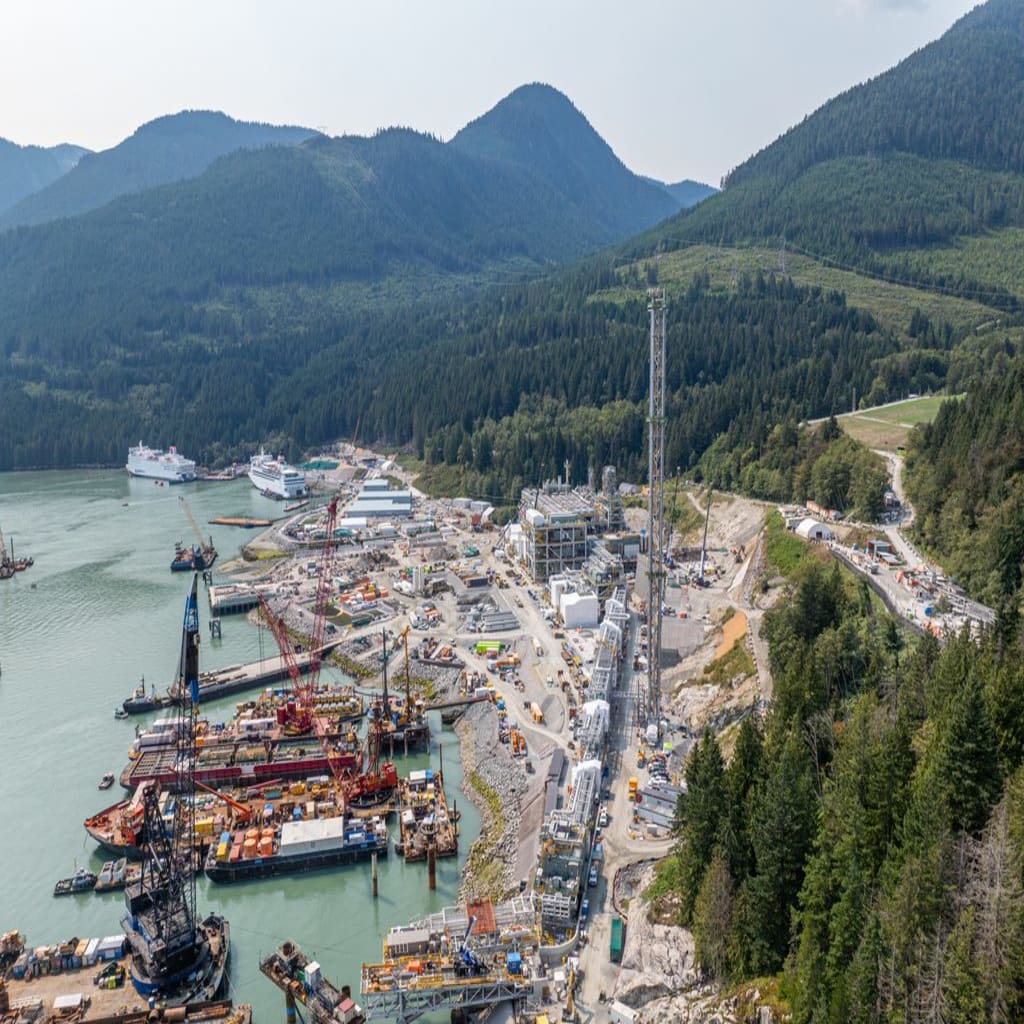
Communities with a direct view of the facility, including Britannia Beach and Furry Creek, will be able to see the flame during flaring. A glow may also be visible at night from Squamish, Stá7mes and other nearby locations. Sound from flaring may be audible in some locations, with the greatest increase above existing background sound predicted at Britannia Beach.
This animation demonstrates how flaring may look and sound from Squamish, Stá7mes and Britannia Beach based on light and noise modelling. The facility depiction is simplified and does not show all infrastructure.
What Light and Noise Modelling Tells Us
The flare will generally be most noticeable at night and from locations with a direct view of the facility. Cloud cover can reflect the flare’s glow, making it appear brighter than under clear skies.
Sound will vary by location and conditions. Britannia Beach is predicted to experience the greatest increase above existing background sound. Predicted changes are smaller in other communities and, in most locations, may not be noticeable.
The sections below provide the predicted light and sound levels for individual communities and explain what air quality modelling tells us about potential effects on human health.
What You May See
Flame and light
During flaring, a flame will be visible at the top of Woodfibre LNG’s 134-metre flare stack. The size and brightness of the flame will vary depending on how much gas is being flared and the conditions that caused the flaring event.
During commissioning — when equipment, processes and safety systems are tested — and following some shutdowns and restarts, the flame is expected to average up to 60 metres in height. In a rare emergency situation, the flame could reach approximately 90 metres for up to 15 minutes.
Flaring will not create additional visible light during the day. At night, the flame and its glow may be visible in surrounding communities, particularly where there is a direct view of the facility.
Cloud cover can reflect the glow from the flare and make it appear brighter than under clear skies. Modelling predicts the following maximum light levels in surrounding communities during cloud cover:
- Squamish: 3.4 lux
- Stá7mes: 3.1 lux
- Britannia Beach: 5.4 lux
- Darrell Bay: 4.5 lux
- Furry Creek: 1.9 lux
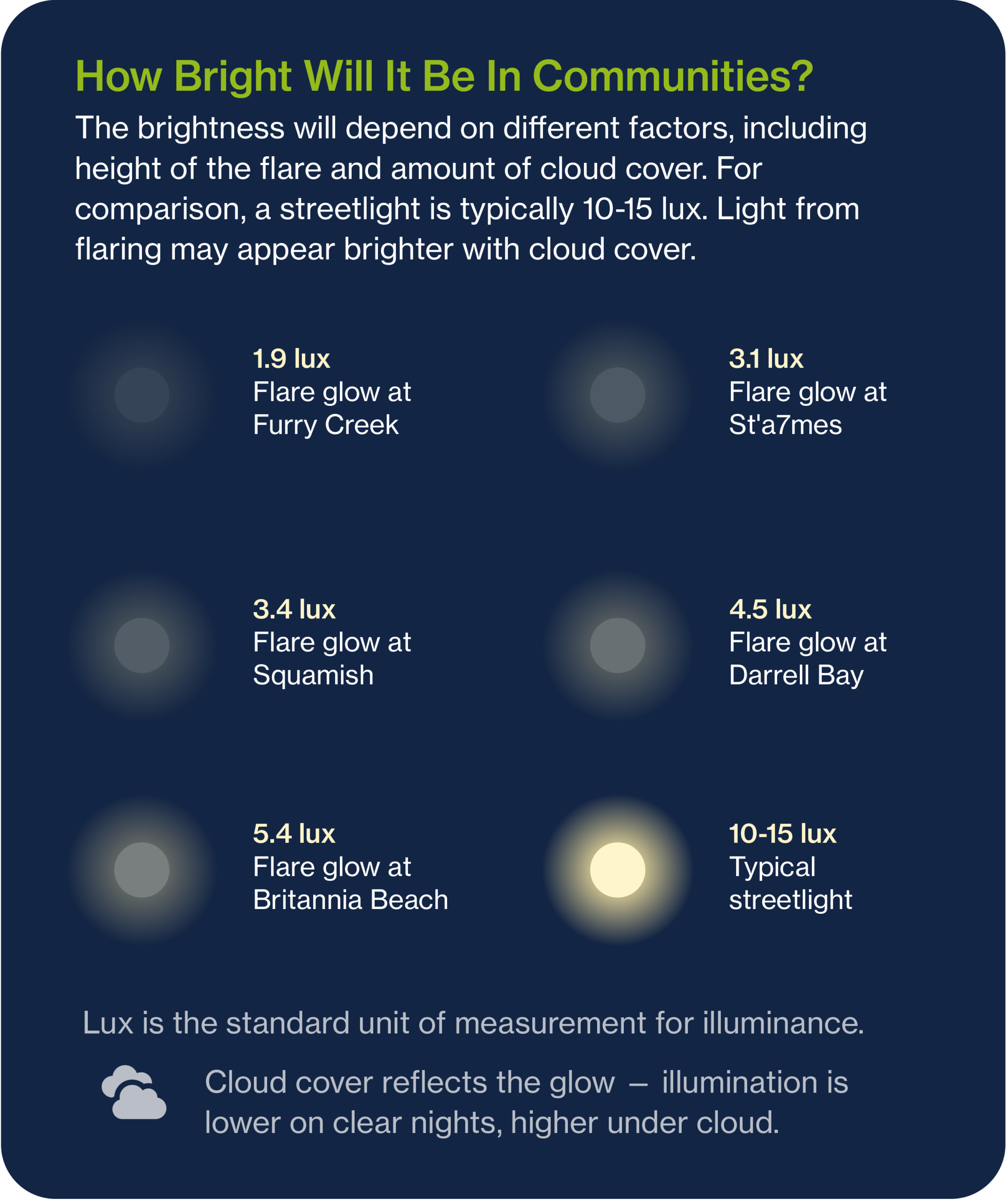
For context, a typical streetlight produces approximately 10 to 15 lux of illumination. These values represent modelled maximum light levels during cloud cover, when reflected light can make the flare’s glow more noticeable.
What about black smoke?
Most of the time, flaring at Woodfibre LNG will produce little or no smoke. There will, however, be specific periods during commissioning when black smoke is expected, and it could occasionally occur during operations.
Black smoke can occur when heavier hydrocarbons are not completely burned. These include naturally occurring components of natural gas, such as pentane and hexane, as well as refrigerants used at the facility, including propane and ethane. Under certain conditions, these heavier hydrocarbons can be directed to the flare, where incomplete combustion can produce visible black smoke.
The flare system is specifically designed to reduce the likelihood of this occurring. Its multi-nozzle flare tip promotes strong mixing of gas and air across different flow rates to support more complete combustion.
Black smoke during operations is also regulated. During planned or unplanned flaring, such as a process upset, black smoke is limited to no more than 15 minutes in any two-hour period. There is no black smoke threshold during commissioning or emergency events, when systems are being tested or responding to unexpected conditions.
While black smoke can be highly visible, its presence does not mean that air emissions are at levels that are harmful to human health. Air quality modelling considered scenarios where black smoke could occur, including during commissioning and unplanned events. Even under these scenarios, predicted concentrations in surrounding communities remain well below the air quality objectives, health-based guidelines and screening levels used to protect human health.
What You May Hear
Flaring produces sound as gas moves through the flare tip and burns. Depending on where you are and the size of the flaring event, sound may be audible in some surrounding communities.
How noticeable it is will depend not only on the flare, but also on distance from the facility, wind and weather, water conditions, traffic and other existing background noise.
Modelling completed by Stantec predicts that flaring will add approximately 1 to 6 decibels (dB) above existing sound levels in surrounding communities, depending on location. For context, a 1–2 dB increase is generally not noticeable, while an increase above 5 dB may be perceptible.
Predicted increases above existing ambient sound levels are:
- Squamish: 2.5 dB
- Stá7mes: 2.5 dB
- Britannia Beach: 5–6 dB
- Darrell Bay: 1–2 dB
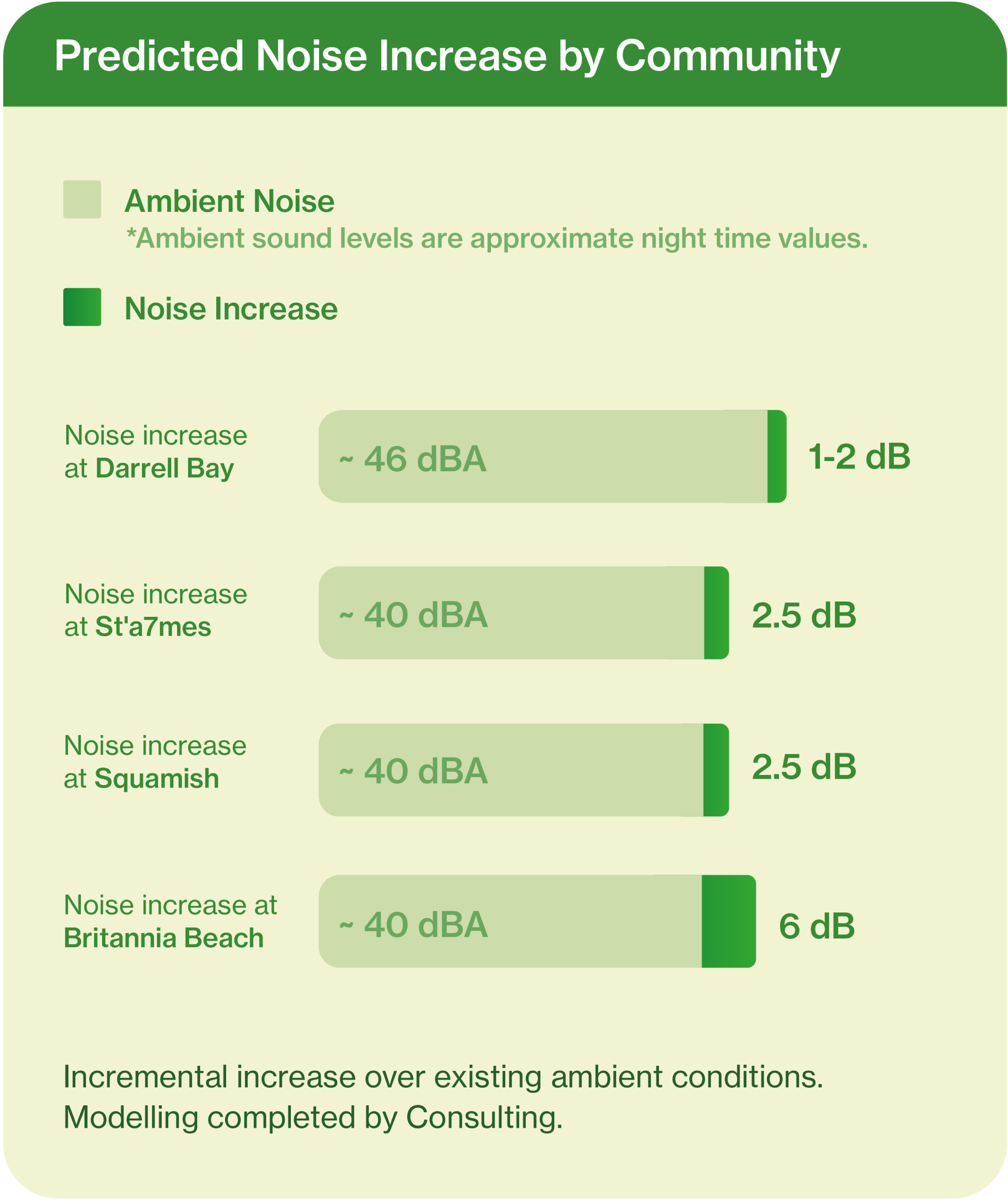
Britannia Beach is predicted to experience the greatest increase. Under calm, quiet nighttime conditions, particularly with windows open, the sound may be comparable to the low hum of a refrigerator compressor.
What about low-frequency noise and sleep?
The modelling also assessed potential low-frequency sound and whether flaring could interfere with sleep.
The BC Energy Regulator uses a difference of 20 dB between C-weighted and A-weighted sound as a screening threshold for potentially significant low-frequency noise. The highest predicted result for Woodfibre LNG is 16.7 dB, with most locations considerably lower.
Maximum sound from individual flaring events is also predicted to remain below Health Canada’s 60 dBA outdoor threshold used to assess potential sleep disturbance from individual noise events.
Air Quality and Your Health
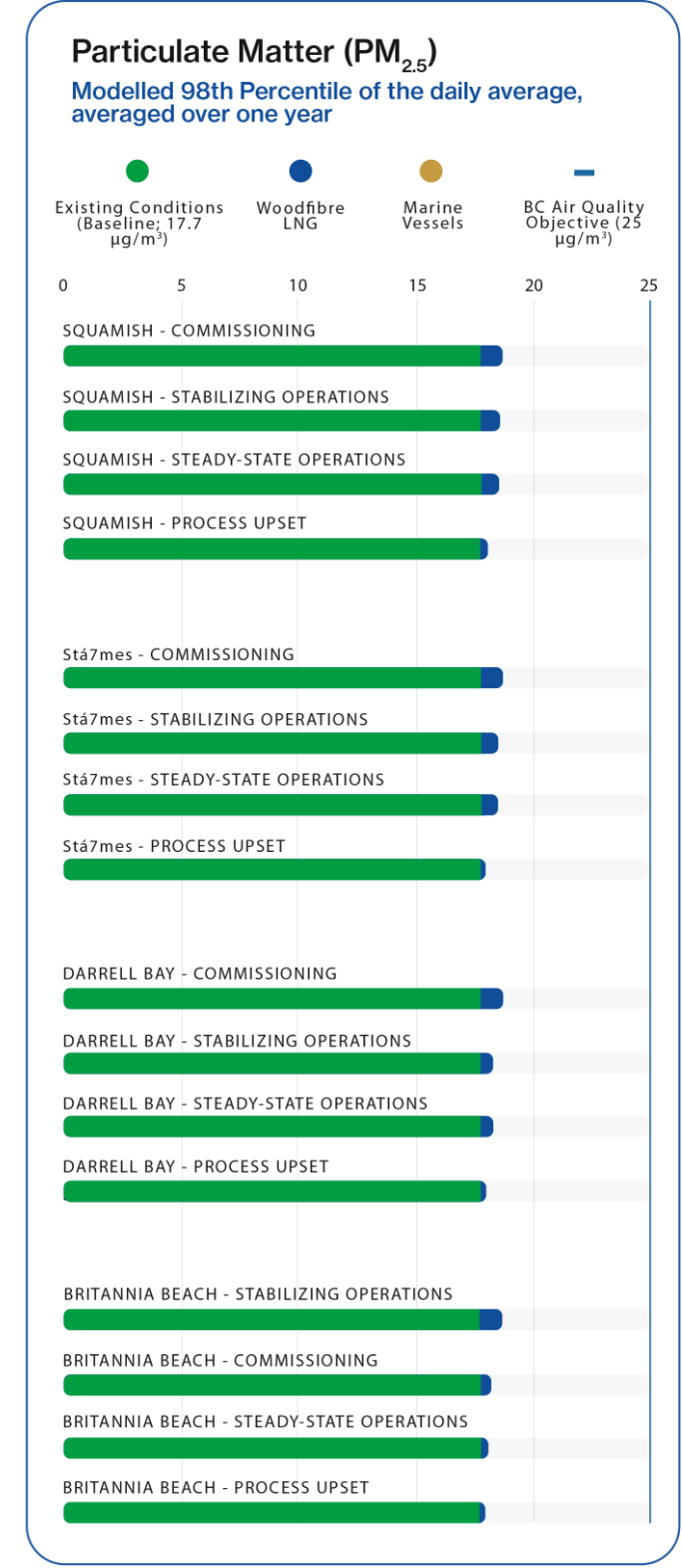
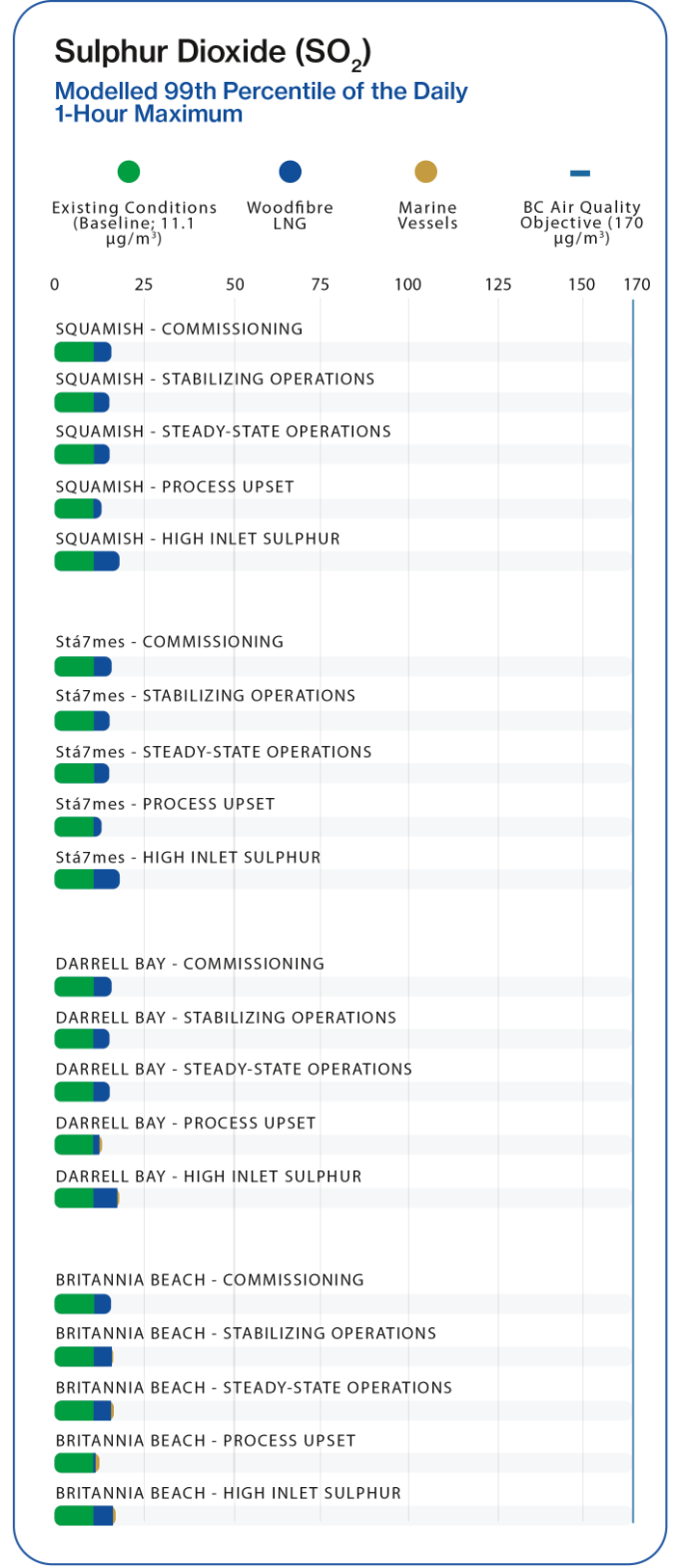
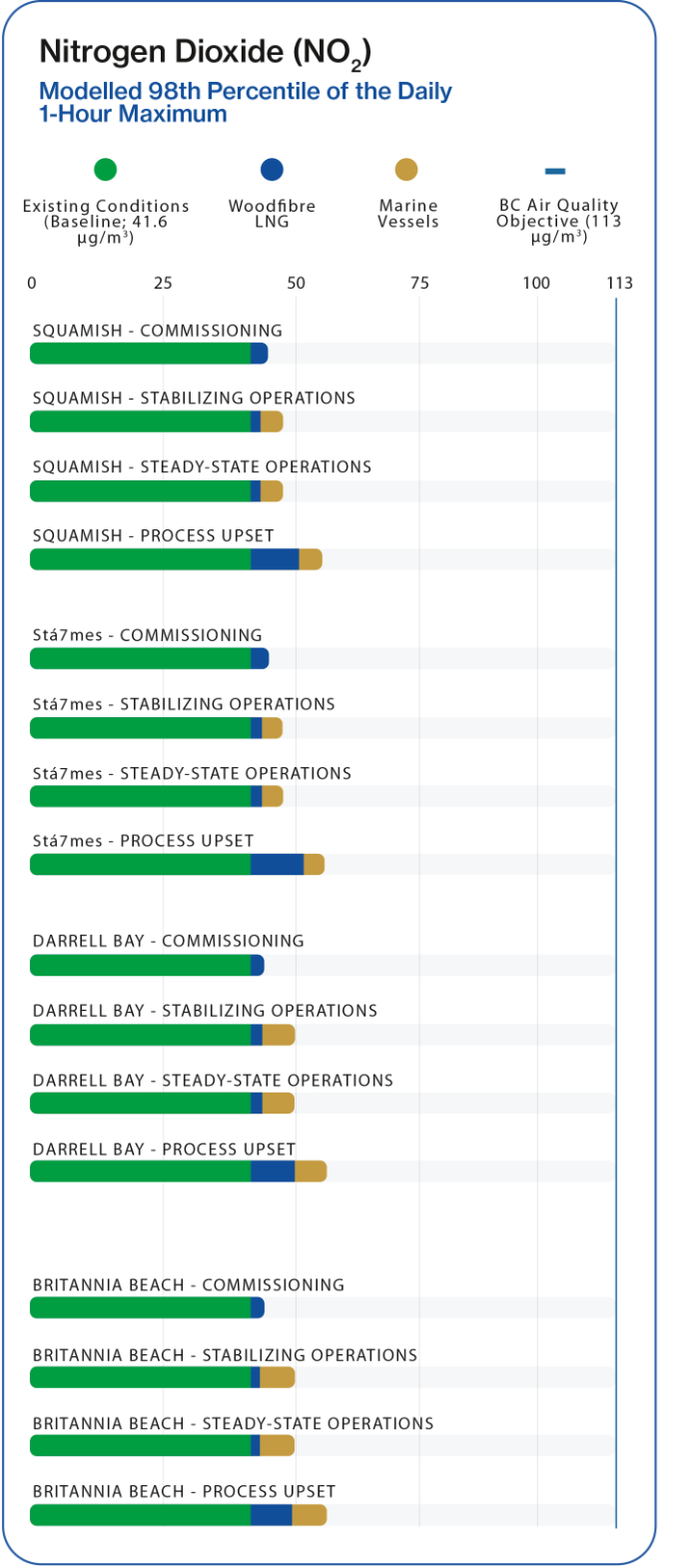
Air quality modelling predicts that emissions from Woodfibre LNG, including during flaring, will remain well below B.C.’s Air Quality Objectives and World Health Organization guidelines in surrounding communities.
These objectives and guidelines are established to protect human health and are used to assess concentrations of air contaminants in the communities where people live, work and gather.
Flaring can be highly visible — and in some circumstances audible — but being able to see or hear a flare does not mean that emissions are present at levels that are harmful to human health.
What does flaring release?
The gas normally burned by the flare is domestic-quality natural gas, the same gas commonly used in home stoves, fireplaces and heating. When natural gas is burned with oxygen, it produces primarily carbon dioxide (CO₂) and water, along with much smaller quantities of other combustion byproducts.
Air quality assessments for Woodfibre LNG considered pollutants including nitrogen oxides (NOx), sulphur dioxide (SO₂), fine particulate matter (PM2.5), carbon monoxide (CO) and volatile organic compounds (VOCs).
The modelling considered different operating scenarios and existing conditions in the region, as well as emissions from the facility, LNG carriers and support tugs, and the FortisBC compressor station.
What does the modelling show?
Stantec assessed potential air quality and human health effects in Squamish, Stá7mes, Britannia Beach, Darrell Bay and Furry Creek.
The modelling indicates that predicted concentrations are highest at or near the Woodfibre LNG facility and decrease with distance. Predicted concentrations in surrounding communities remain well below the air quality objectives, health-based guidelines and screening levels used in the assessment.
For example:
- During routine operations, predicted concentrations of VOCs in surrounding communities are below applicable screening levels — by 1,000 to more than 1,000,000 times in some cases.
- Maximum predicted hourly concentrations of nitrogen dioxide and sulphur dioxide in nearby communities are below World Health Organization guidelines.
- Across the operating scenarios assessed, including commissioning, steady-state operations and unplanned events, predicted concentrations in surrounding communities remain below health-based thresholds.
The modelling supporting Woodfibre LNG’s Environmental Assessment Certificate application and more recent Waste Discharge Authorization application was completed by Stantec, an environmental consulting firm with experience assessing air quality and human health effects for industrial and LNG facilities.
How Flaring Impacts Are Minimized and Monitored
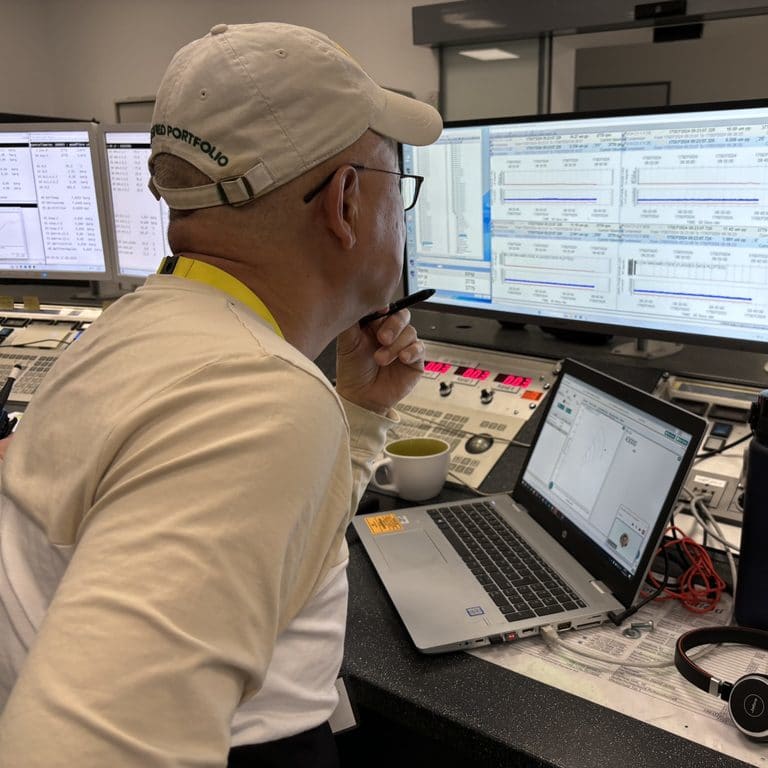
The Woodfibre LNG facility is designed to reuse and recycle gas where possible and to keep flaring to the minimum needed for safe operations.
Several measures will help reduce flaring and its potential impacts:
- Electric-driven compressors require less maintenance than gas-powered compressors, reducing shutdowns and the flaring associated with subsequent restarts.
- A multi-nozzle high-pressure flare tip supports efficient combustion across different operating conditions and reduces the likelihood of black smoke.
- Flow meters will measure the amount of gas being flared to support emissions monitoring and reporting.
- Woodfibre LNG’s BC Energy Regulator-approved Flaring Management Report contains approximately 20 mitigation measures designed to minimize flaring.
Air emissions and air quality will also be monitored during operations. The BC Energy Regulator will require Woodfibre LNG to measure emissions from facility sources and monitor air quality in the surrounding environment as part of the facility’s Waste Discharge Authorization.