Flaring
Supporting Safe
Operations
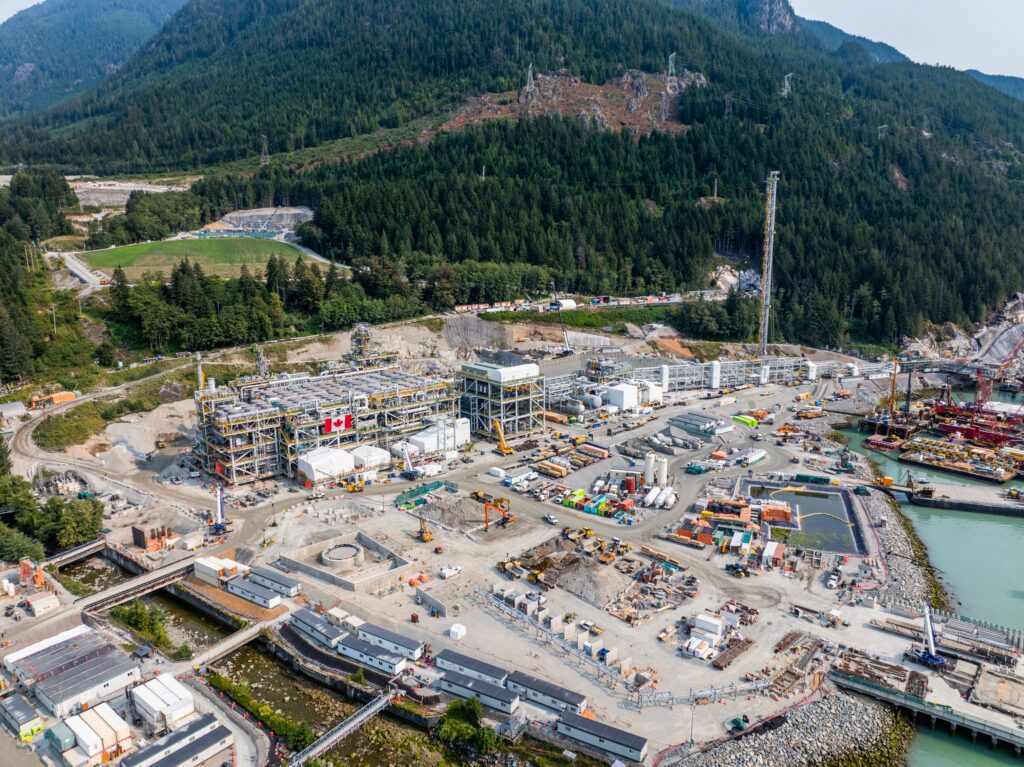
Flaring is an important safety function at LNG facilities that safely manages excess natural gas in a controlled way during certain operating conditions, including commissioning, startup, shutdown, maintenance and unplanned events.
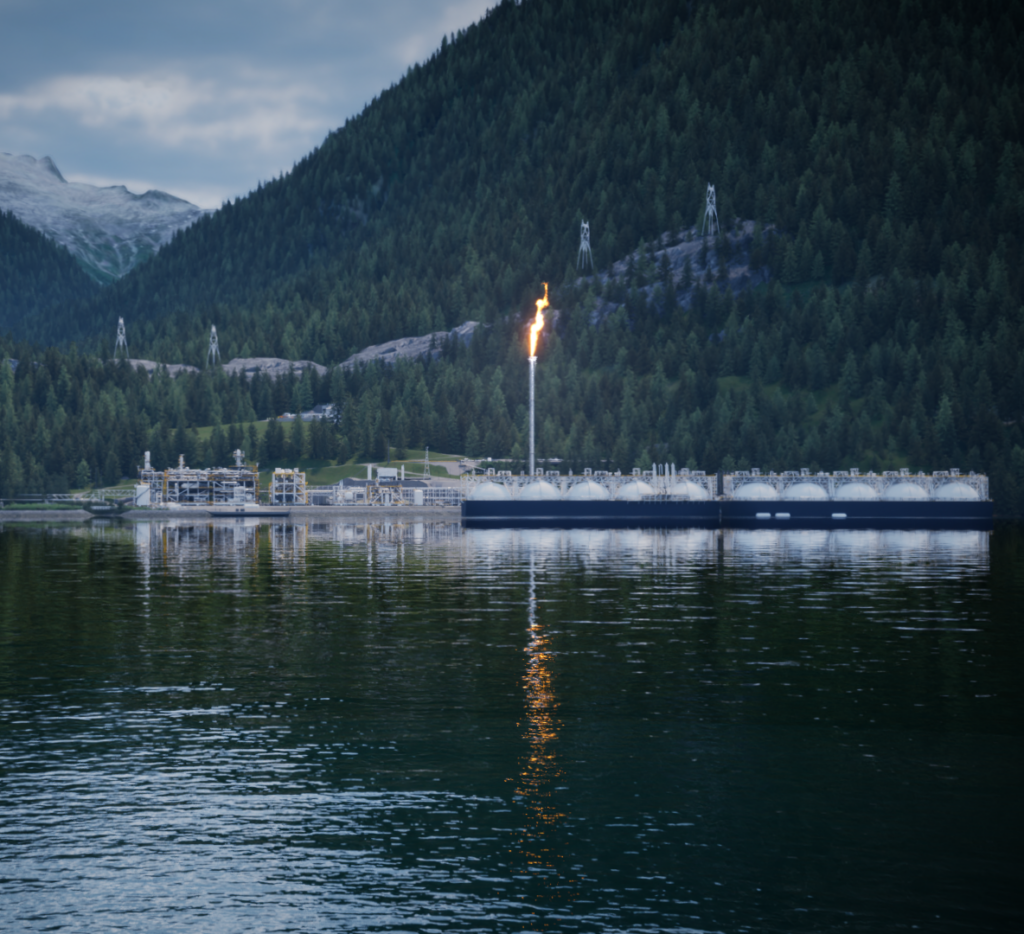
*Simulation image shown is for illustrative purposes only. Actual flare size, brightness, and visibility may differ depending on circumstance. The facility depiction is simplified and does not show all infrastructure
How Flaring Works
Flaring is a controlled, built-in pressure-relief and disposal system designed to safely burn excess natural gas and relieve pressure during certain operating events. The gas burned in the flare is domestic-quality natural gas (methane), the same gas commonly used in home stoves, fireplaces and heating. When gas cannot be used or recovered by the facility, it will be burned in a controlled manner rather than released directly into the atmosphere.
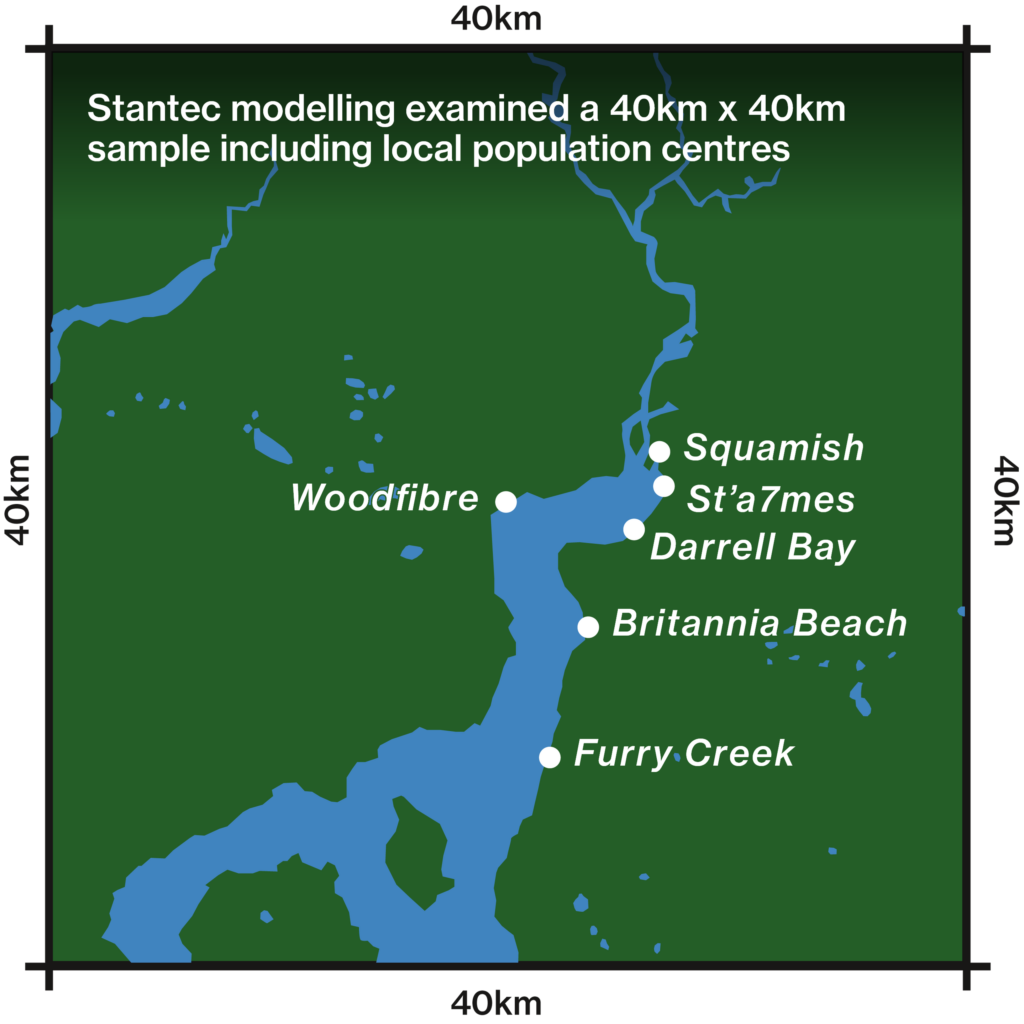
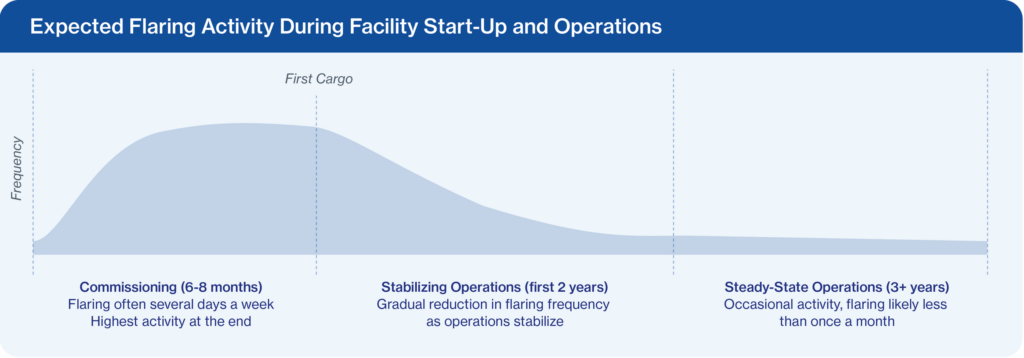
Flaring can be planned, such as during commissioning, startup, scheduled shutdowns or maintenance, or unplanned in response to an unexpected event such as a loss of power. Flaring is expected to be more frequent during commissioning, which is anticipated to begin at Woodfibre LNG in mid-2027 and last approximately six to eight months. During this time, flaring will often occur several days a week, with individual events lasting from less than 15 minutes to more than a week. Flaring is then expected to gradually decrease through approximately two years of stabilizing operations. Once the facility reaches steady-state (normal) operations, flaring is expected to be occasional, likely less than once a month.
Woodfibre LNG is designed with multiple controls to keep flaring to the minimum needed for safe operations. Design and operational measures help reduce the amount of gas sent to the flare, including reusing and recycling gas where possible, and supporting efficient combustion when flaring occurs.
Understanding Potential Impacts
How noticeable flaring is will depend on where you are, the amount of gas being flared, weather conditions, and background light and sound.
When flaring occurs at Woodfibre LNG, people in surrounding communities may see a flame or glow from the flare stack. Most communities are unlikely to notice noise from flaring. No odour is expected in surrounding communities, though it may be detectable at or near the facility. Most flaring will produce little or no smoke, although black smoke may be visible during some events. Air pollutant concentrations in nearby communities are predicted to remain well below B.C.’s health-based Air Quality Objectives.
Modelling, Monitoring and Oversight
Modelling helps us understand what to expect from flaring. Once flaring begins, monitoring will measure actual conditions and compare them with those predictions.
Woodfibre LNG will measure facility emissions, monitor air quality in the surrounding environment and report information to regulators in accordance with regulatory requirements. Woodfibre LNG is committed to transparent communication about flaring and flare reporting.